Ugali (Refined Maize Meal)
Ugali (wa unga wa mahindi)
About
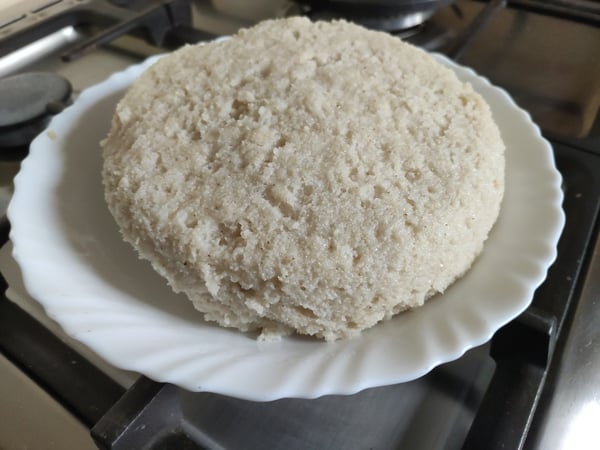
Ugali is Kenya's most iconic staple food - a stiff porridge made by cooking maize flour in boiling water until it forms a firm, dense dough. It is eaten at almost every meal across the country, typically served alongside sukuma wiki, beef stew, or fish. Refined maize flour ugali is the most commonly consumed variety in urban areas.
Sourced from the Kenya Food Composition Tables (2018), Kenya's official government food composition database (KFCT code 15009*), reviewed by our nutrition team.
About
Ugali is Kenya's most iconic staple food - a stiff porridge made by cooking maize flour in boiling water until it forms a firm, dense dough. It is eaten at almost every meal across the country, typically served alongside sukuma wiki, beef stew, or fish. Refined maize flour ugali is the most commonly consumed variety in urban areas.
Sourced from the Kenya Food Composition Tables (2018), Kenya's official government food composition database (KFCT code 15009*), reviewed by our nutrition team.
Nutrition Facts
*Source: Kenya Food Composition Tables (2018), Mixed Dishes, Table 15, code 15009 - Refined Maize Flour Ugali
*data cleaned & organised by Fit Savanna
Serving Calculator
Serving Calculator
Adjust grams to recalculateTags
Photos
© Fit Savanna
© Fit Savanna
© Fit Savanna
© Fit Savanna
Popular recipes with Ugali (Refined Maize Meal)
 Classic White Ugali with Butter20 min · Serves 4 · Easy · 222 kcal/servingClassic White Ugali with Butter
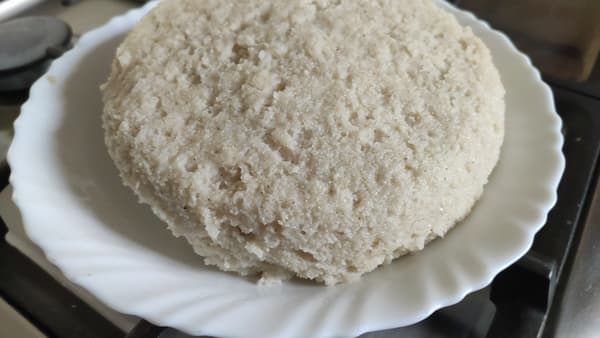
The everyday method for making stiff, smooth white ugali from refined maize meal - Kenya's most common staple, ready in about 20 minutes with just three ingredients.
Ingredients
- •3 cups Maize meal (white corn meal)
- •4 cups Water - normal tap water
- •1 tbsp Blueband margarine or butter (optional - adds calories, can be omitted)
Method
- 1Fill your sufuria about 3/4 full of water and bring to a rolling boil over high heat.
- 2Once boiling, scoop out a cup or two into a separate container and set aside. Leave at least half the water, or more, in the sufuria. You will use this reserved water later if the dough needs softening.
- 3This is also where you can add a spoon of Blueband or butter, if using. It adds a lot of flavour to the ugali. Let it melt fully before you start adding unga.
- 4Reduce the heat slightly. Pour in about 1 cup of maize meal (unga) and start stirring immediately and continuously with a wooden spoon (mwiko), breaking up any lumps.
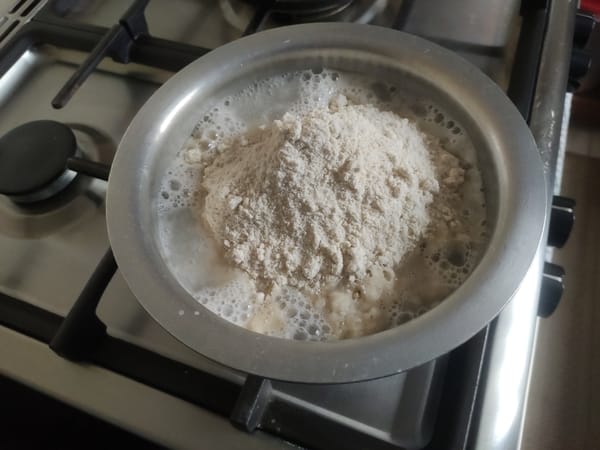
- 5Keep stirring and adding more unga gradually, a little at a time, whenever the mixture feels too light or wet. Continue until it thickens into a stiff dough. It should not pour or drop off the mwiko, but the mwiko should still be able to push into it without too much resistance.
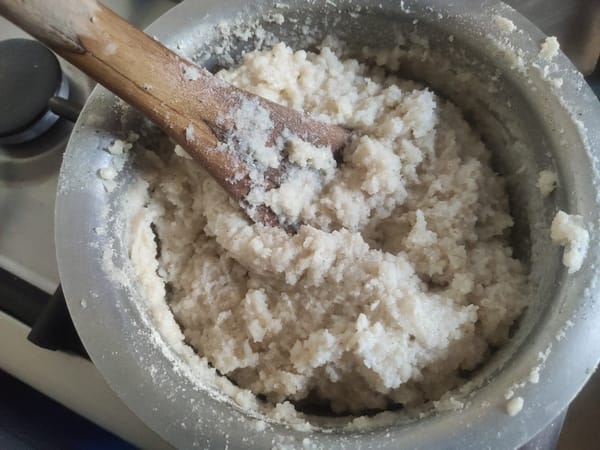
- 6If it gets too stiff, or you see dry unmixed patches of unga, add back small amounts of the reserved hot water, little by little, stirring in between, until it is soft and evenly mixed with no dry lumps.
- 7Turn heat down to low and let the mixture simmer, undisturbed, for about 8 minutes. A light crust may form where the mixture touches the sufuria, which is normal. Just make sure nothing is actually burning or turning black and charred.
- 8Check the mixture, turn it over with the mwiko, then leave it again on low heat for another 5 to 7 minutes so it cooks through evenly.
- 9Using the mwiko, shape the ugali into a small mound inside the sufuria so it will release cleanly.
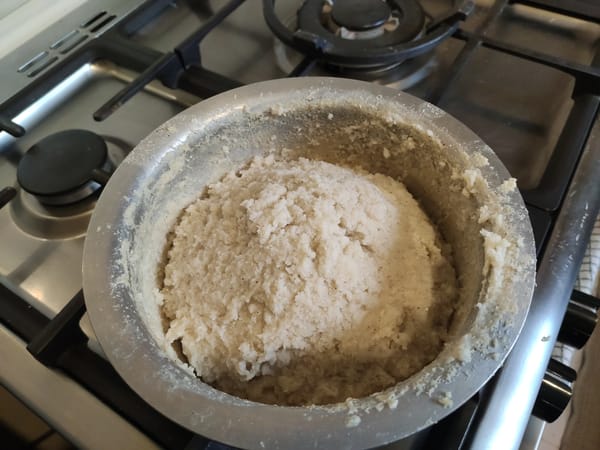
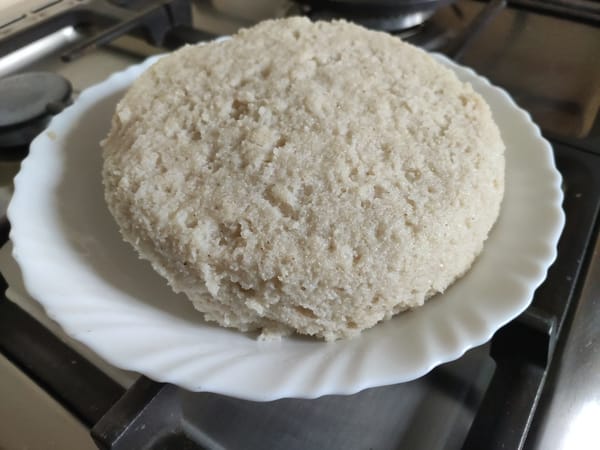
- 10Place a metal or glass plate face down over the mouth of the sufuria, then flip the whole thing over together. You should feel the ugali drop cleanly onto the plate.
- 11Lift off the sufuria now, or leave it in place a bit longer to let the ugali firm up as it cools. Slice and serve hot with sukuma wiki, stew, or fish.
Recipe: Fit Savanna
Frequently asked questions
How many calories are in a plate of ugali?
A standard plate serving of cooked refined maize ugali (about 300g) contains approximately 444 kcal, along with 10g of protein, 6g of fat, and 82g of carbohydrates. A smaller serving of 200g comes in at around 296 kcal.
Is ugali good for weight loss?
Ugali is high in carbohydrates and moderate in calories, so portion size matters greatly. It has very little fat and a reasonable amount of fibre. Eaten in modest portions alongside protein-rich sides like beans or eggs, it can fit into a calorie-controlled diet. Problems arise when large portions are eaten with fatty stews, which can push total meal calories very high.
Does ugali have protein?
Yes, but not much. Cooked refined maize ugali contains about 3.4g of protein per 100g. A standard 300g serving gives you roughly 10g of protein - well below the 20-30g target most people should aim for per meal. Always pair ugali with a protein source such as beans, eggs, meat, or omena.
Is ugali gluten-free?
Yes. Traditional ugali made from 100% maize flour is naturally gluten-free. However, some blended ugali flours may include wheat or finger millet, so always check the label if you have a gluten intolerance or coeliac disease.
What is the difference between refined and whole maize ugali?
Whole maize flour ugali (code 15005 in KFCT 2018) retains the bran and germ, giving it more fibre (3.8g vs 4.0g per 100g cooked), more B vitamins, and a slightly lower glycaemic impact. Refined maize flour is stripped of the bran, resulting in a smoother, whiter ugali that is more common in urban Kenya but nutritionally inferior to the whole grain version.