Health & Wellness in Kenya
Practical health guidance covering physical and mental wellness for Kenya's climate and lifestyle.
Why exercise affects more than your body
Exercise is the most effective mental health intervention most people are not using
Regular physical activity reduces symptoms of anxiety and depression comparably to medication in mild to moderate cases. The mechanism is well established, not anecdotal.
Cardiovascular health is built over years, not weeks
Consistent moderate-intensity cardio over months reduces resting heart rate, lowers blood pressure, and meaningfully cuts the risk of heart disease. There is no shortcut.
Resistance training protects bone density
Bone loss accelerates after 30. Weight-bearing exercise is the primary modifiable factor that slows it. This matters more for women but applies to everyone.
Moderate exercise supports immunity; overtraining suppresses it
The relationship between exercise and immune function is not linear. Consistent moderate training helps. Chronic overtraining without recovery creates an inflammatory state that does the opposite.
Health markers worth tracking
Resting heart rate
60 to 100 bpm
Lower generally indicates better cardiovascular fitness. Nairobi's altitude can push this slightly higher than sea-level norms.
Blood pressure
Below 120/80 mmHg
The single most important number to monitor. High blood pressure has no symptoms until it causes serious damage.
Body composition
Muscle-to-fat ratio
Scale weight is a poor indicator of health. Two people at the same weight can have very different health profiles depending on how much of that weight is muscle.
Sleep quality
7 to 9 hours
Urban noise and heat disrupt sleep more than most people realise. Consistent poor sleep raises cortisol, impairs recovery, and drives appetite dysregulation.
Energy levels
Consistent through the day
Energy that crashes mid-afternoon or spikes and drops sharply usually points to blood sugar instability, poor sleep, or dehydration.
Hydration status
Pale yellow urine
In Kenya's climate, most people are chronically mildly dehydrated without knowing it. Dark urine is a reliable signal to drink more.
Free tools
Articles & resources
11 articles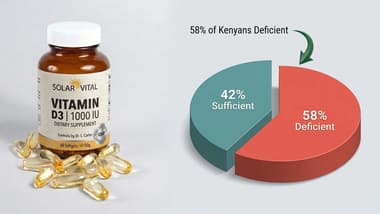
You Are Probably Vitamin D Deficient if You Live in Nairobi

The Dangerous Mbaki and Mbarīki Movement in Kenya: What You Need to Know

Bad Breath (Halitosis) Myths in Kenya: Why Brushing Alone Probably Won't Stop It

Most Kenyans Will Not Live Beyond 70, But There Is a Way Out
Obesity in Kenya Is at an All-Time High

The Hidden Cost of Breathing in Nairobi

Can Viagra Replace Your Pre-Workout?

Kenyan Youths are More Depressed Than Ever - Study Shows

Complete Home Workout Guide for Kenya

Advanced Recovery Methods for Kenya's Climate
