
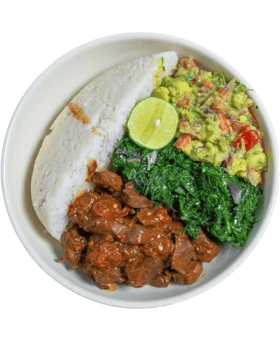
Free Kenyan Food Tracker
Calories, macros, and micronutrients - sourced from KFCT (FAO × GoK) & USDA.
Why use Fit Savanna Food Tracker?
International food trackers can have gaps in local food coverage. Fit Savanna includes Kenyan foods such as mukimo and tsiswa, using KFCT nutrition data. Also, in our testing, AI usually underestimates calories for local foods compared with government data (KFCT). Main food search uses verified nutrition data only.

Mursik in a Gourd
(fermented whole milk; assuming in 250ml cup)
Energy summary
If you are unsure about your daily energy needs or targets, Calculate your TDEE first →
Spotted an issue? Tell us! →
Learn about popular local foods
Many foods include local name alternatives so you can find what you are looking for regardless of whether you know the English or local name.
Staples
1 food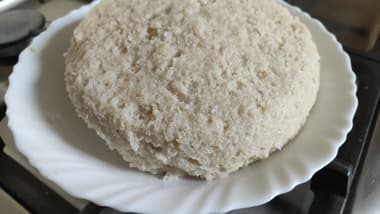
Proteins
2 foods
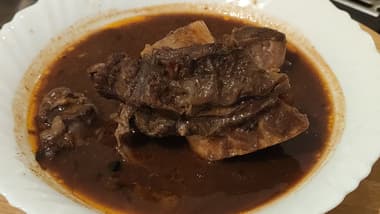

Mixed Dishes
4 foods
Mandazi (East African Fried Doughnuts)
Mandazi ya kawaida
Chai ya Maziwa (Kenyan Milk Tea)
Chai ya maziwa
Kombucha (Fermented Tea)
Kombucha
Uji Power (Blended Cassava, Nduma, Peanut & Milk Drink)
Uji PowerFrequently asked questions
What is the best food tracker for Kenyan foods?
Fit Savanna focuses on Kenyan meals such as ugali, sukuma wiki, omena and nyama choma. It combines Kenya Food Composition Tables (KFCT) data with USDA and verified public sources, including manufacturer labels. Search by food or local name, choose a serving or enter grams, and track calories, macros and micronutrients for free.
How does Fit Savanna compare with MyFitnessPal or Cronometer for Kenyan meals?
Fit Savanna offers a local food catalogue, familiar Kenyan names and serving presets, with no account or payment required. KFCT provides the foundation, complemented by USDA and public entries reviewed by Fit Savanna using packaging, supermarket checks or published sources. Each entry identifies its source. Nutrient detail varies between tables and labels, with estimates and calculated composites identified where applicable. Choose the tracker whose food coverage and workflow suit you best.
How can I track my food for free?
Search for a food, pick a serving size or enter grams, and add it to your diary. Food logs stay in your browser across days and reloads. You can add food for today or any past date and edit its portion. Use Set Targets at the bottom to set calorie, macro and TDEE values. In Backup / Restore, use System Backup to transfer or restore your history, or Readable Backup (PDF) to read, print or share your food logs.
How should I track my food?
Log meals as you eat them, choosing the correct preparation state and weighing portions where practical. Named serving presets are available for many foods. Set Targets automatically picks up your saved TDEE calculation, or you can enter your own expenditure. Choose a separate calorie target for your goal. Use the date picker to add forgotten meals or correct portions on a past date.
Can my phone count my calories?
Yes. Open fitsavanna.co.ke/foods in your phone browser, search for the food you ate, choose a portion and add it to the diary. Your history saves in that browser. Download a System Backup and upload it using Restore to move logs to another device. You can also add the page to your home screen from your browser menu.
How many calories are in ugali?
KFCT data shows that cooked ugali made from refined maize flour contains 148 kcal per 100g, with roughly 27g of carbohydrates, 3g of protein and very little fat. Whole maize flour ugali has 141 kcal per 100g, slightly lower than refined maize flour ugali. A standard restaurant serving of ugali (around 300 to 400g) therefore provides approximately 444 to 592 kcal. Ugali made from whole maize combined with sorghum or millet flour has slightly more fibre and micronutrients.
How many calories are in sukuma wiki?
Cooked sukuma wiki (kale) is very low in calories, around 25 (steamed without salt) to 54 (stir-fried) kcal per 100g. A typical side serving of about 150g contributes roughly 38 to 81 kcal. It is a good source of iron, calcium, folate, and vitamins A and C. The exact calorie count depends on how much oil is used during cooking.
What are examples of fortified foods in Kenya?
Under Kenya's mandatory food fortification programme, refined maize flour, wheat flour, sugar, edible oils, and salt are all required by law to be fortified. These are among the most widely consumed foods in Kenya, making fortification an effective way to address common nutrient deficiencies at a population level.
Which flours are fortified in Kenya?
Both refined maize flour and wheat flour are mandatorily fortified in Kenya. Refined maize flour is fortified with iron, zinc, vitamin A, and B vitamins including folic acid and B12. Whole grain, sorghum, and millet flours are not subject to the same fortification requirements, so despite being more nutritious in fibre and natural micronutrients, they may lack the added vitamins and minerals found in refined flours.
How is maize flour fortified?
Maize flour is fortified by blending a premix of micronutrients directly into the flour during milling. In Kenya, this premix typically includes iron, zinc, vitamin A, folic acid, and other B vitamins. The process is regulated by the Kenya Bureau of Standards (KEBS) and applies to all commercially milled refined maize flour sold in Kenya.
Does fortified ugali have more nutrients than whole grain ugali?
It depends on the nutrient. Fortified refined maize flour ugali will have higher levels of added micronutrients like iron, zinc, and vitamin A than unfortified whole grain ugali. However, whole grain ugali made from sorghum or millet naturally contains more fibre, magnesium, and phytonutrients that are lost during the refining process. For overall nutritional quality, whole grain options are generally preferable, but fortified refined ugali can help fill specific micronutrient gaps.
What is the KFCT 2018?
KFCT stands for Kenya Food Composition Tables. The 2018 edition was produced through a collaboration between the Food and Agriculture Organization (FAO) and the Government of Kenya. It contains verified nutritional data including calories, macros, and micronutrients for hundreds of foods commonly eaten in Kenya. It is the most authoritative local reference for Kenyan food nutrition and the primary data source used throughout this tracker.
Does the tracker save my food log?
Yes. Food, water and weight history save in browser local storage and remain when you reload or close the tab. New days start an empty diary without deleting previous days. Clearing browser data removes this history, so download System Backups regularly. Upload a System Backup using Restore to transfer or recover logs. Readable Backup (PDF) is for reading, printing and sharing; it cannot restore logs. There is no automatic cross-device sync. If you request Nutrition Insights, a summary of your logs is sent to generate the response.
How do I know how many calories I should eat per day?
Your calorie target depends on body size, age, activity and your goal. The Fit Savanna TDEE calculator can estimate daily expenditure. Set Targets imports a saved calculation automatically and asks before applying a newer one. You can also edit TDEE there and set your calorie goal separately. The consumed and remaining rings use your calorie target; expenditure shows your TDEE.
Can I track macros as well as calories?
Yes. The second diary slide shows energy, protein, net carbs and fat against your targets. Expand a food card to see its macros and available micronutrients. Set calories and macros together in Set Targets, with independent calorie and protein locks. You can also enable an optional fibre target and progress bar. The third slide shows highlighted micronutrient bars and access to daily and weekly breakdowns. A warning explains when bars use known subtotals from incomplete data. Nutrient coverage varies by source; a nutrient absent from an entry should not be assumed to have been measured as zero.
Which ugali is good for diabetes?
For people managing diabetes or blood sugar, ugali made from whole grain flours - sorghum, millet, or whole maize - is a better choice than refined maize flour ugali. Whole grain ugali has a lower glycaemic index, meaning it raises blood sugar more slowly. Sorghum and millet ugali also contain more fibre and natural micronutrients than refined maize ugali. Portion size matters as much as flour type: even whole grain ugali is carbohydrate-dense, so pairing it with protein and vegetables helps slow glucose absorption further. Anyone managing diabetes should work with a registered dietitian for personalised guidance.
Data source: FAO/Government of Kenya. 2018. Kenya Food Composition Tables. Nairobi. Additional entries use USDA data, manufacturer labels and public sources verified by Fit Savanna. Food values use 100g edible portions in the preparation state shown; volume-labelled drinks use 100ml and are logged in millilitres. Estimates and calculated composites are identified in the tracker. Nutrition data is for informational purposes only and should not replace advice from a registered dietitian or healthcare provider.
Page last updated: