The Honest Case for Counting Calories (From Someone Who Hated the Idea)
Calorie tracking sounds tedious, restrictive, and joyless. But after resisting it for months, I discovered it wasn't about restriction at all - it was about finally seeing what I was already doing.
Wouldn't it be easier to eat whatever we wanted and never stress about tummies and dad bods? Just eyeball your plate, eat, and move on; why complicate eating?
Honestly? You probably can. It's just that most of us just don't like what happens next.
The hard truth is that our "hunger compass" was calibrated for a world that didn't include double-stuffed Oreos or anything fried and processed. And no, this isn't a discussion on whether processed foods are good or bad.
We like to think we have an intuitive sense of what a serving size looks like, but if you stick a "standard" portion of rice next to what we actually pour into the bowl, the math starts looking like a creative writing project.
The resistance to tracking food makes sense. Counting calories sounds tedious, restrictive, maybe even a little joyless. It feels like trading freedom for spreadsheets.
I know this because I've been there.
Why I Resisted It Too
When I started this fitness journey in early 2022, I was drowning in advice. The idea that there were no "holiday breaks" or "ending" to fitness, that this had to last until old age, nearly made me quit before I'd really started.
But a few weeks in, fitness stopped feeling like a task I had to remember and started feeling like something my body just... expected. Like sleep. Like hunger. It quietly became part of my weekly routines and, in many cases, I had to restructure tasks around it.
Calorie tracking did the same thing, even though I resisted it just as hard. I didn't want to think about what was in my food. I just wanted to eat my rice and beans in peace without turning every meal into a chemistry class.
But after a while, I realised tracking was never meant to be a life sentence. It was more like calibration; a few weeks of paying close attention so that eventually, you don't have to.
And it worked. After a week or two, I could estimate within about 5% whether I'd hit my protein goals, whether a portion was too much or too little - no app needed. The tracking had quietly rewired how I saw food. The scale became optional because the eye had learned to do the job.
Whenever I change diet, perhaps after getting bored by one, I give myself about a week or two of tracking to get used to the quantities I need to hit my macros.
The Details You're Probably Ignoring
One thing tracking taught me is how much the details actually matter. Sure, you had beef for dinner, but how did you prepare it? Was it lean? Did you grill it or fry it? And what about that cup of chai with "just one samosa" on the side, does that even count?
It counts. It all counts.
Without tracking, it's almost impossible to account for these nuances, even if you know the theory. Knowing that beef is high in protein doesn't tell you much if you don't know what your specific portion - the one that actually fills you up - looks like in numbers.
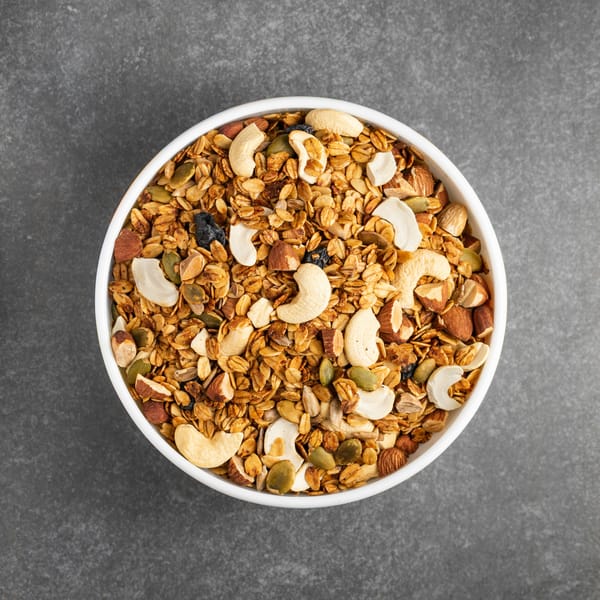
Granola looks like a light, healthy option, until you track it. A single cup can carry over 400 calories before you add milk. (Photo by Abhishek Hajare on Unsplash)
This is where the "eyeball method" usually commits its biggest crimes: the extras.
We count the steak, but we forget the two tablespoons of butter it was basted in. We count the salad, but ignore the dressing that has like double or triple the calories than the greens.
It’s like trying to balance a checkbook while ignoring every transaction under KES100; eventually, those "small" amounts add up to a massive deficit you can’t explain.
Tracking forces you to acknowledge the gastronomic gaslighting we do to ourselves. It turns those "I barely ate anything today" mysteries into "Oh, that’s where those 600 calories came from" moments of clarity.
The Problem: Wanting Results Without the Work
I know a lot of people who have this obsession with having the flattest tummy around, but the moment I mention calorie tracking to them, it almost turns into a fight.
They'd rather hear about how two strength sessions a week and eating "in moderation" will deliver god-like body recomposition in three months.
And look, I get it. That version sounds better.
But the uncomfortable truth is that without some awareness of how much you're actually eating, the results will always feel random - like you're doing everything right and the body just isn't cooperating. Weight loss, muscle gain, or both: the math still has to work somewhere.
That’s when some people start blaming genetics and hormones for their lack of weight loss. To be fair, a lot of people genuinely do deal with those challenges.
But if you aren't tracking, you'll never know whether the obstacle is physiological or simply that you've been unknowingly eating more than you think. You can't fix what you can't see.
Where to Start
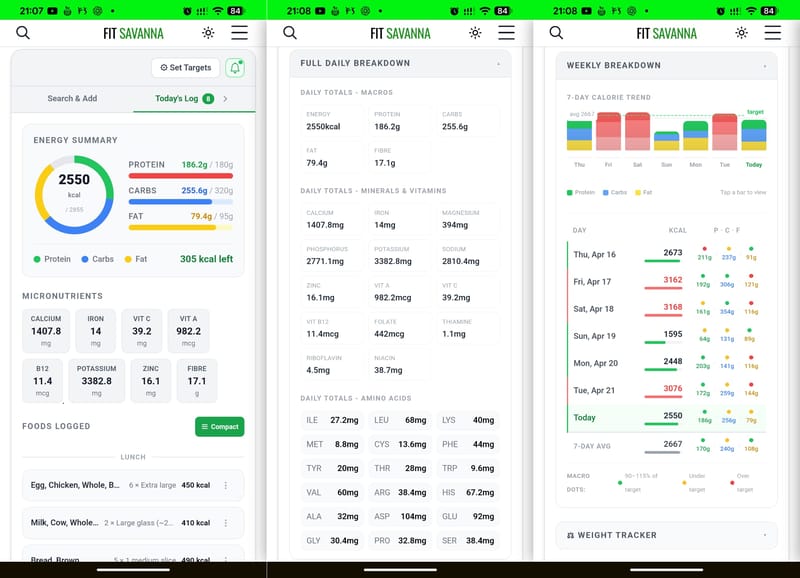
If you're not sure where to start, the barrier is lower than you think. Apps like Cronometer and MyFitnessPal cover most foods, and if you're eating local, we built a Kenyan food tracker specifically for this - Mukimo, Tsiswa, ugali, sukuma, samosas and all.
The Fit Savanna food tracker was built specifically for Kenyan meals; local foods that don't show up on MyFitnessPal or Cronometer. (Image: Fit Savanna)
Pick one, use it for two weeks, and see what you actually learn.
You Don't Have to Do This Forever
So, do you have to track calories forever? No. Nobody is asking you to log every grain of rice until you're 80.
But for a few weeks - enough to actually see what you've been doing - it might be the most useful uncomfortable thing you do for your health.
Eating intuitively is the goal. Tracking is just how you learn what your intuition should actually sound like.
Editor's note: This article is intended for general informational purposes only and does not constitute medical or nutritional advice. If you have an underlying health condition or are considering significant changes to your diet or exercise routine, please consult a qualified healthcare professional before doing so.



Join the conversation!
Share your thoughts on “The Honest Case for Counting Calories (From Someone Who Hated the Idea)” below.