Mandazi (East African Fried Doughnuts)
Mandazi ya kawaida
About
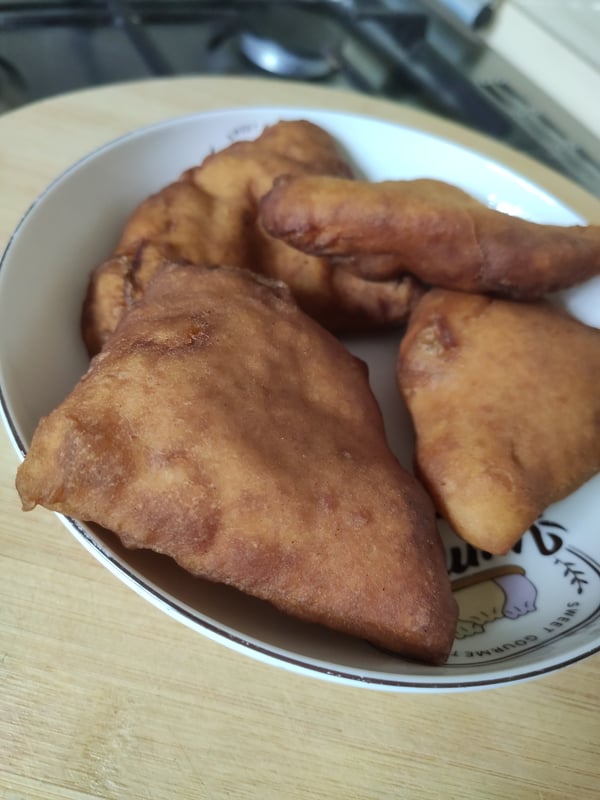
Mandazi are lightly sweetened, deep-fried triangles of dough, popular across Kenya and the wider East African coast as a breakfast food or tea-time snack. This basic version uses a simple flour, sugar, and coconut-free dough, giving it a soft, slightly chewy interior and a golden fried crust. It is most often eaten alongside a cup of chai ya maziwa.
Sourced from the Kenya Food Composition Tables (2018), Kenya's official government food composition database (KFCT code 15125), reviewed by our nutrition team.
About
Mandazi are lightly sweetened, deep-fried triangles of dough, popular across Kenya and the wider East African coast as a breakfast food or tea-time snack. This basic version uses a simple flour, sugar, and coconut-free dough, giving it a soft, slightly chewy interior and a golden fried crust. It is most often eaten alongside a cup of chai ya maziwa.
Sourced from the Kenya Food Composition Tables (2018), Kenya's official government food composition database (KFCT code 15125), reviewed by our nutrition team.
Nutrition Facts
*Source: Mixed Dishes, Table 15, code 15125 - Basic Mandazi (East African fried doughnuts, no coconut milk)
*data cleaned & organised by Fit Savanna
Serving Calculator
Serving Calculator
Adjust grams to recalculateTags
Photos
© Fit Savanna
© Fit Savanna
© Fit Savanna
Frequently asked questions
How many calories are in one mandazi?
A single basic mandazi (about 60g) contains approximately 204 kcal. Two mandazi (120g), a common breakfast portion, add up to around 408 kcal. Mandazi made with coconut milk or extra sugar will run higher.
Is mandazi healthy?
Mandazi is a fried, sugar-and-flour snack, so it is best treated as an occasional treat rather than an everyday staple. It does provide some iron, calcium and B vitamins from the flour, but it is energy-dense and low in fibre and protein relative to its calories. Pairing it with a protein source like eggs helps balance a breakfast built around it.
How much sugar and fat is in mandazi?
Basic mandazi contains 12.9g of fat and 48.7g of carbohydrate per 100g, most of the carbohydrate coming from the flour and added sugar in the dough. Frying is the main source of the fat content, so oil quality and how well it is drained after frying can meaningfully affect the final fat level.
What is the difference between mandazi and doughnuts?
Mandazi are typically less sweet than Western doughnuts, triangular rather than ring-shaped, and often flavoured with cardamom or coconut milk rather than glazed or filled. They are usually eaten plain with tea rather than topped with icing.