Mr 001 2025 Recap: The Good, the Bad, and the Ugly
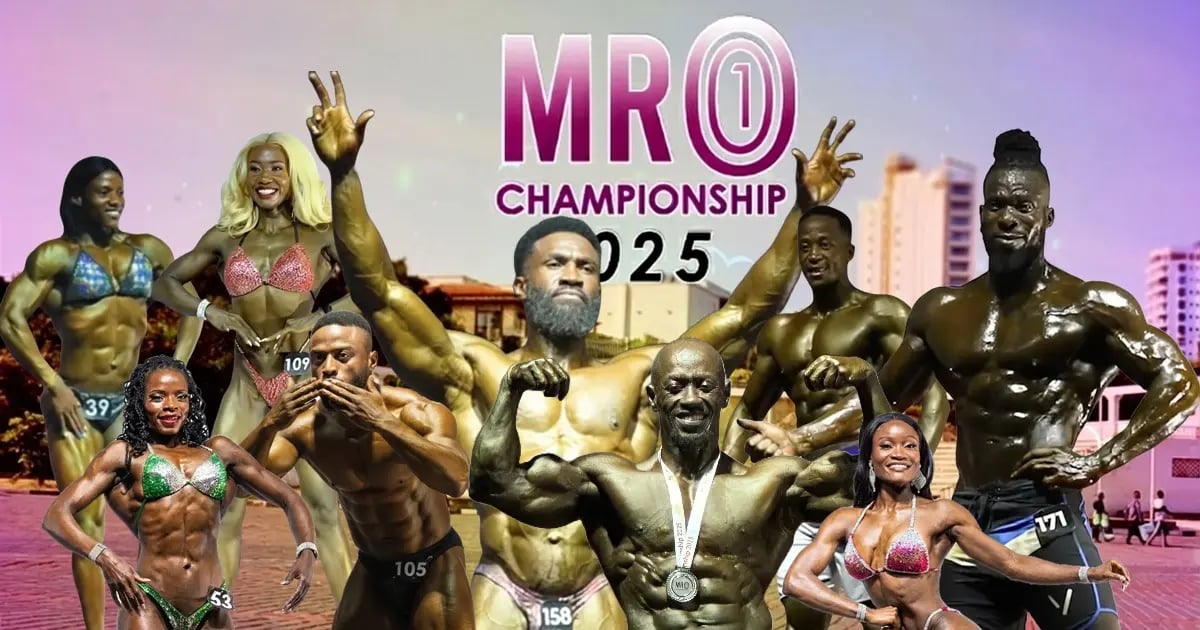
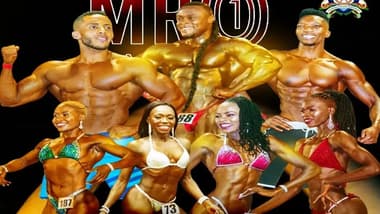
As the only local bodybuilding show held in 2025, Mr 001 exposed persistent organisational weaknesses in Kenyan bodybuilding, including delays, athlete welfare issues, and missing categories.
Update: Official Statement & Conflicting Payment Claims (22 December 2025)
Following publication of this recap, the Mr 001 organising committee released an official statement on 19 December 2025 addressing concerns about prize money and event structure.
Key clarifications from the committee:
All individual bodybuilding weight classes (Bantamweight through Heavyweight) were consolidated under a single “Open Bodybuilding” category, which awarded positions 1–6
The committee states that all awards were distributed based on available funds, with no athlete intentionally disadvantaged
Over 70% of the event budget was self-financed by organisers, with sponsorship accounting for under 10% and ticket sales under 20%
The committee categorically denies allegations of fraud or mismanagement
Conflicting Accounts:
However, questions about payment remain. Jibril "Iron" Shaffi (@iron.shaffi), founder of IronFit Classic who placed 5th in the Heavyweight class at Mr 001 2025, told Fit Savanna on 22 December that he had not yet received compensation, when asked about the payment organisers claimed was distributed to positions 2-6.
This directly contradicts the organisers' statement that "all awards were distributed based on available funds" with no athlete intentionally disadvantaged.
The statement does not address the specific prize amounts paid to second- through sixth-place finishers, nor does it explain why the advertised prize structure listed separate amounts for individual weight classes if they were always intended to be consolidated.
Athletes’ complaints regarding reduced prize money for positions 2–4, detailed in our original coverage below, therefore remain unaddressed in terms of specific figures.
Original Story:
Unlike the Iron Classic Show and the MMEA, which were cancelled a few months ago, the Mr 001 event actually happened, and for that alone, it deserves credit.
But simply showing up is no longer enough; not for athletes who diet for months, not for fans who sit through heat and delays, and not for a sport trying to professionalise East Africa to the levels of South or West Africa.
Held over the weekend of Friday 12th and Saturday 13th at the Coast Gymkhana Grounds in Mombasa, Mr 001 2025 delivered several memorable moments, especially for athletes.
Unfortunately, it also exposed the same organisational weaknesses that continue to hold local bodybuilding shows back.
The Ugly: Organisation Struggles and Athlete Welfare
There is a common stereotype about timekeeping in Kenya, one I disagree with, but the events of Mr 001 made it hard to ignore.
The event was scheduled to start at 9:00 am, but proceedings only kicked off past 11:00 am, immediately setting the tone for a long night that dragged on until nearly 3:00 am.
One of the most glaring issues was competitor welfare. There was initially no tent or shaded waiting area for athletes preparing to go on stage.
Competitors (novice categories) were left exposed to the intense Mombasa heat, visibly struggling as they waited their turn.
The situation became so severe that audience members complained about athletes’ feet being scorched by the overheated stage, prompting organisers to pour water on it to cool it down.
Ironically, it was only after the novice men qualifiers that a tent was finally erected; far too late for many competitors who had already endured hours under the sun.
Food availability was another major concern.
There were no food vendors on site, and whilst drinks and water were available initially, they ran out by the end of the day, leaving both athletes and spectators stranded.
The Bad: Delays, Judging Concerns, and Audio Issues
As the show progressed, frustrations grew around judging delays.
The audience repeatedly complained that judges took too long to make decisions between rounds, a delay that significantly contributed to the show running until nearly 3:00 am.
Audio quality was another recurring complaint. In many instances, the MC's voice was barely audible, leaving spectators confused about category transitions, results, and announcements.
There were also concerns around prize money distribution.
Whilst first-place winners reportedly received their full cash awards, competitors who placed 2nd, 3rd, and 4th claimed that the amounts in their envelopes were less than what had been announced.
Whether intentional or not, this erodes trust. Competitive bodybuilding already demands huge financial sacrifice from athletes. Reducing payouts without clear communication is not just bad optics but also damaging to the sport.
Additionally, the Mombasa Governor, who was expected to attend, did not show up.
Finally, complaints emerged that the proximity between KES 5,000 and KES 10,000 ticket holders effectively erased the perceived value difference between VIP and VVIP tickets.
A Missed Opportunity: Women's Physique Category
Perhaps the most disappointing and arguably the most criticised omission was the complete absence of a Women's Physique category.
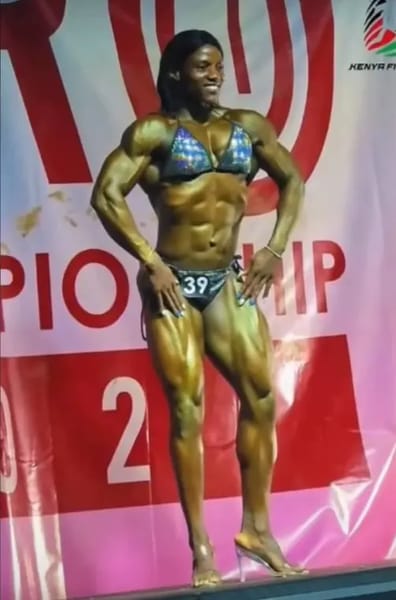
This decision directly affected Zulaika Najuma from Uganda, one of the most muscular female athletes at the show.
Zulaika Najuma of Uganda, forced to compete in Women's Figure at Mr 001 2025 due to the absence of a Women's Physique category | @najjumazulaikah
With nowhere appropriate to compete, she was forced into Women's Figure, only to be penalised repeatedly for being "too muscular."
That isn't her failure. That's the system's.
For a regional show aiming to grow, excluding Women's Physique sends the wrong message, especially when the talent is clearly present.
Inclusivity Done Halfway
Mr 001 deserves credit for including a category for people living with disability.
But with only two competitors and awards limited to a medal and a packet of milk, many felt the gesture stopped short of meaningful recognition.
If inclusivity is going to be part of the show's identity, then the respect, rewards, and presentation must match the effort these athletes put in.
The Good: Standout Performances and Champions
Despite the issues, the athletes showed up, and the stage still produced exceptional physiques and deserving winners.
Judging duties were led by Lisa Cox, an experienced international judge.
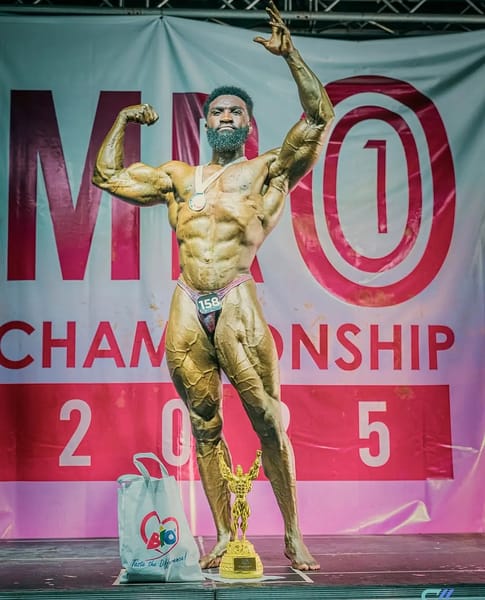
Philip Guya after winning Men's Open Heavyweight and Overall Champion at Mr 001 2025 | @philipguya
Guya's win felt less like a surprise and more like a confirmation.
After taking Classic Physique at MMEA last year, his overall victory here cemented his status as one of the region's most complete bodybuilders.
Special mention goes to Joseph Wesonga (@alpha_wes_), who recently placed 2nd at the NPC African Championships 2025 (Class E) in South Africa on 6th December, just one spot shy of an IFBB Pro Card, and still managed a 3rd place finish in Men's Physique at Mr 001.
Joseph Wesonga at the NPC African Pro Qualifier Championships 2025 in South Africa, where he placed second, narrowly missing an IFBB Pro Card | @alpha_wes_
Advertised Prize Money
According to promotional materials released before the event, Mr 001 2025 advertised a total prize pool of KSH 2,800,000 in cash prizes, with the following amounts for first-place winners:
Women's Categories:
Figure: KSH 100,000
Bikini: KSH 100,000
Wellness: KSH 100,000
PWD Female: KSH 50,000
Strength Open Female: KSH 100,000
Strength Novice Female: KSH 75,000
Men's Categories:
Men's Open: KSH 300,000
Men's Physique: KSH 100,000
Classic Physique: KSH 100,000
Masters: KSH 100,000
PWD Male: KSH 50,000
Strength Open Male: KSH 100,000
Strength Novice Male: KSH 75,000
The promotional material stated that cash prizes would be awarded to positions 2-6 in all categories, though specific amounts for these positions were not publicly disclosed before the event.
First-place winners reportedly received their full advertised amounts, whilst competitors in positions 2-4 reported receiving reduced amounts compared to expectations.
Joe Ripper: One Foot Out the Door
Joseph "Joe Ripper" Kabugi's win in Men's Physique felt significant for reasons beyond the trophy.
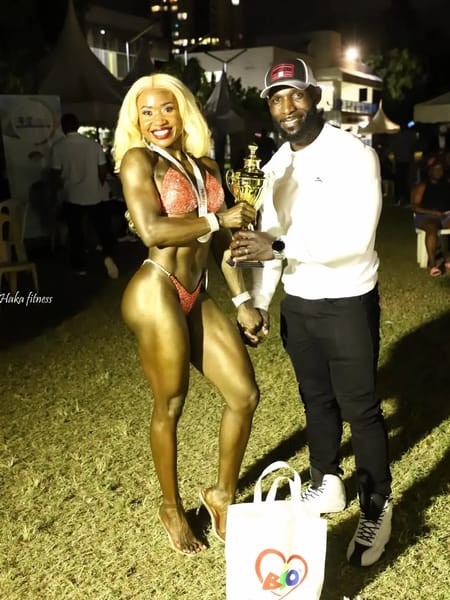
Joseph "Joe Ripper" Kabugi after winning Men's Physique at the Mr 001 Championship 2025 | @joeripper03
Fresh off his MMEA Men's Physique title last year, Joe Ripper has since publicly hinted that he is done with local shows, setting his sights squarely on the international stage and an IFBB Pro card.
As noted earlier, he was ahead of Joseph Wesonga, an athlete who recently came one position away from earning an IFBB Pro card at the NPC African Championships in South Africa.
That context makes Joe Ripper's victory impossible to ignore.
Obviously beating Wesonga doesn't automatically guarantee international success. The global Men's Physique stage is ruthless.
But it does suggest that the gap between local champions and international contenders may be smaller than we like to admit.
The conditioning, structure, and confidence are clearly present. What remains to be seen is how his look stacks up against knurlier, more muscular, and brutal international lineups.
Another thing is, what incentive does a reigning MMEA Men's Physique champion, now a Mr 001 winner, have to keep showing up to events where shows start hours late, athlete welfare feels like an afterthought, prize money becomes a post-show rumour, and categories are inconsistently structured?
This is how local bodybuilding quietly loses its best athletes; not through dramatic exits, but through attrition. Former Mr 001 champion Hanif Msallam, Richard Gitau, and Evelyn Okinyi Owala now regularly compete internationally, having moved beyond the local scene.
Either way, Ripper's message is clear: local domination may no longer be the goal.
The Apology... and the Questions It Didn't Answer
In the days following the event, the Mr 001 organising committee released an official statement apologising for challenges related to service providers, unfinished stage setup, and poor PA sound quality.
The statement emphasised passion, sacrifice, and the fact that Mr 001 was the only bodybuilding event staged this year.
Whilst the acknowledgement was welcome, it raised new concerns, particularly amongst athletes.
"We sincerely apologise to our athletes, fans, and supporters for the challenges experienced during the event, particularly regarding service provider issues, unfinished stage setup, and PA sound quality. These shortcomings do not reflect our respect for the athletes or the sport."
In the comments under the post, some competitors and supporters claimed that certain athletes were left out without ever performing, effectively losing months of preparation with no explanation.
That issue was not addressed in the official statement.
Apologies matter, but in a sport where preparation is expensive, physically brutal, and time-sensitive, clarity matters more.
Who was affected? Why did it happen? And how will athletes be protected from this in future editions?
Until those questions are answered, the apology feels incomplete.
So… Was Mr 001 2025 a Success?
That depends on who you ask.
But it proved that Kenyan bodybuilding has the talent, the fanbase, and the hunger for big shows.
However, it also highlighted persistent issues around event planning, athlete welfare, transparency, and inclusivity.
The athletes showed up prepared. The fans showed up patient. Now, the challenge is for organisers to match that commitment.
Mr 001 has the potential to be a flagship event. But potential alone doesn't build credibility. Execution does.
And until that improves, the sport - and its athletes - will continue to pay the price.
Editor’s Note:The list of winners may be incomplete, as participants were announced using competition tags rather than full names. Fit Savanna made several attempts to reach the organisers and some competitors without success. Independent verification of several winner names was made possible with assistance from @brio_mo, who helped confirm athlete identities. If you notice any omissions or inaccuracies, please share the missing details via mr001@fitsavanna.co.ke. Thank you.
Join the conversation!
Share your thoughts on “Mr 001 2025 Recap: The Good, the Bad, and the Ugly” below.