Uji Power Is Just Expensive Purée - Not Actually Uji
Uji power is everywhere, but is it actually worth the hype and the price? We break down what's in it, how healthy it really is, and whether you'd be better off just eating the ingredients separately.
We all have a love-hate relationship with uji (porridge). It's one of those foods many of us grew up hating because of how our parents forced us to drink it, mostly dufia (zero-sugar), for "health" benefits. But then adulthood hits, and that same sour tang of fermented wimbi (finger millet) that once disgusted us becomes something we find ourselves quietly craving.
If we're being honest though, uji gets boring pretty quick, mostly because of the loads of cooking utensils you have to wash for 2 hours after satisfying that craving for just 30 minutes. Who has all that time when you also need to spare some for doom-scrolling the latest TikToks and Reels? Seriously!¯\_(ツ)_/¯
Also, with influencers like Gachau Njoroge constantly telling us to "unfat," even with the willpower to clean up, we can't just consume it whenever we want to, because "it's just carbs," right? But what if we could make it healthy? Or rather, what if influencers gave us "healthier" uji alternatives?
And they have done just that. We now have uji power.
What is Uji Power?
It's a blend of cassava, nduma (Colocasia esculenta or just Kenyan arrowroot), roasted groundnuts (peanuts), milk, and honey, with the latter being optional. Some recipes also include sunflower seeds and sweet potatoes. Basically, if it sounds healthy, it probably belongs in there.
For example, some versions, especially ones sold by street vendors, also include mũkombero (Mondia whitei or White's ginger), whose rootstock is often used traditionally for medicinal purposes.
How Do You Prepare Uji Power?
Despite the variations in ingredients, preparation is often straightforward. You first need to peel and wash nduma and cassava (wash after peeling since they come with dirt) then dice them into small chunks and boil until fully cooked and soft.
The ratio is usually 3:1 for cassava to nduma, especially because many vibandas say too much nduma leaves people with heartburn.
When cooked, allow the mixture to cool off a bit and add it to the blender. In case some chunks are large, cut them into smaller pieces to make it easier for your blender.
Now add half a cup of roasted peanuts (can be blanched or skinned, but the latter is better for fibre and added antioxidants), then add one cup (500ml) of milk and start blending. You can be flexible with milk since the amount to add depends on how smooth you like your uji power.
You can also add water if you don't want too much milk, or just skip milk entirely if you're lactose intolerant. If you need to sweeten your uji, add honey or even sugar, with honey being the preferred option.
In essence, what you end up with is a purée - unlike traditional uji, which is grain-based (wimbi, maize, or sorghum) and cooked rather than blended. That distinction matters more than it sounds, and we'll get to why shortly.
How Healthy is Uji Power, really?
I'm not here to dispute the health benefits of uji power; anyone who can read and do some basic research can clearly see its nutrition profile is quite solid.
Starting with cassava and nduma, these are mostly complex carbohydrates - healthy in that regard especially considering they are unprocessed, with the former having 33 grams per 100g and the latter having 22 grams per 100g, according to the Kenya Food Composition Tables. Both are quite low on protein, as you can see on our Kenyan food tracker, which pulls from aforementioned government database.
These also contain a relatively healthy dose of micronutrients like potassium, calcium, manganese, vitamin E, and copper; not quite clinical level doses, but nice to haves nonetheless.
What cassava and nduma lack in protein is supplemented quite nicely by peanuts and milk, both of which add protein content considerably. Milk, assuming you aren't lactose intolerant, offers about 3 grams of protein per 100ml, while peanuts offer about 28 grams per 100 grams. They also provide other nutrients like calcium, magnesium, potassium, and B-complex vitamins.
Finally, if you decide to add honey, you will benefit from its antioxidants, antimicrobial properties, and natural enzymes; a small addition that punches above its weight nutritionally.
Not Entirely Healthy - or Cheap
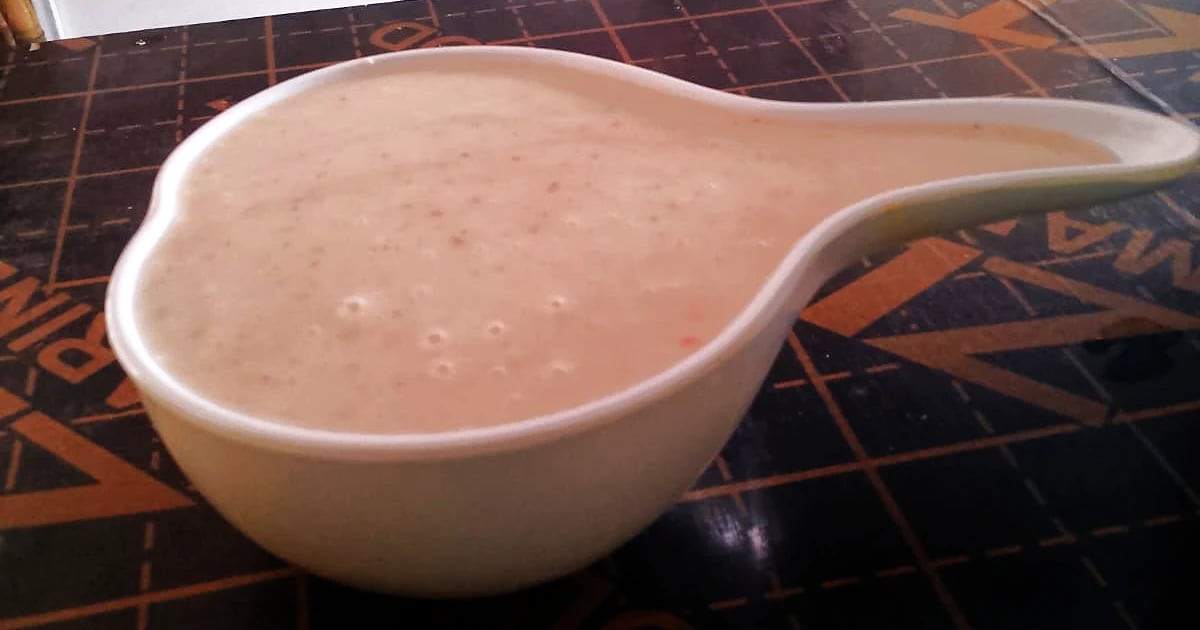
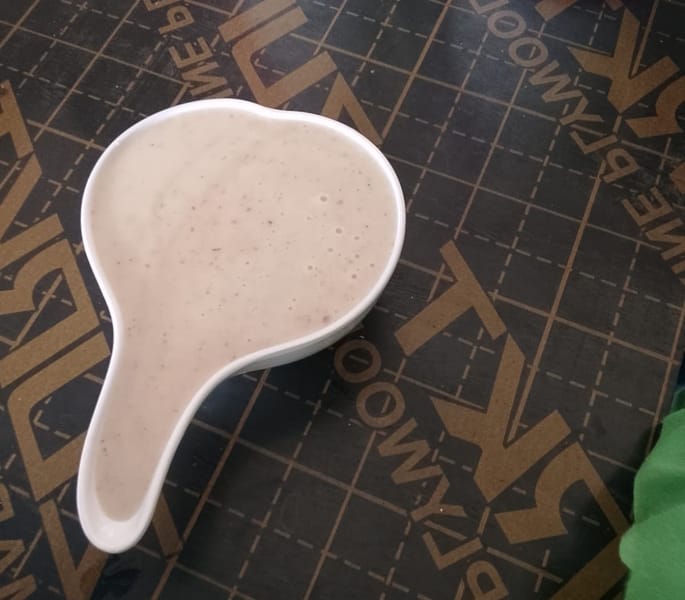
A typical uji power serving at a local restaurant - goes for about 100sh at most vendors. (Photo: Fit Savanna)
But with all these benefits, why call it just a purée? Because you can get the same nutritional benefits by eating these ingredients individually - and with better portion control.
Blending compresses volume significantly, meaning a single cup of uji power can pack at the very least twice the calories you would consume eating the same foods separately, making it almost impossible to track your macros properly.
Guya, a very popular bodybuilder, has also been known to sometimes blend his food, like chicken, to make it easier to eat enough food for bulking. Should we call that uji power too? Or perhaps uji power is just a Kenyan way of saying purée?
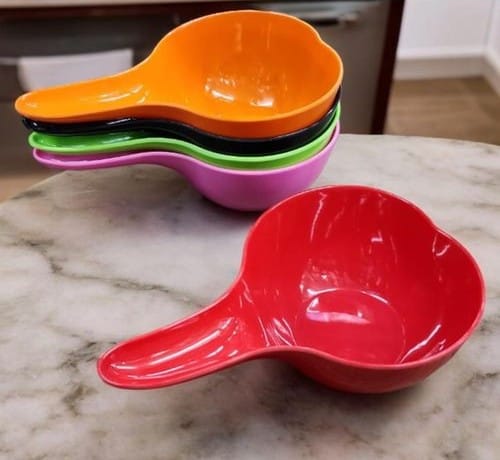
This is not forgetting that uji power is usually served in a half-calabash-shaped bowl, which is considerably larger than a standard cup.
Nutrient
Per 250ml cup
Per 500ml calabash
Calories
~381 kcal
~763 kcal
Protein
~11g
~23g
Carbohydrates
~53g
~107g
Fat
~13g
~27g
Fibre
~6g
~12g
Estimates based on a standard home recipe (400g boiled cassava, 220g boiled nduma, 75g roasted peanuts, 500g whole milk, 20g honey). Values derived from Kenya Food Composition Tables (KFCT). Vendor versions may vary.
Take cassava and nduma for example; you are unlikely to sit down and eat 200 grams of each in one sitting. But blend them together with peanuts, milk, and honey, and that same amount disappears into a single cup you can finish in five minutes.
There is also the sugar question. While honey is the "healthier" sweetener, most people won't add it conservatively, especially because you don't want it to taste like you're drinking food - who wants that? eww!🤢
You obviously add enough to make it taste good, which can push the sugar content higher than expected. The same goes for milk and peanuts; they add considerably to carbs and fat.
But anything eaten in excess, regardless of how healthy it is, will be stored as fat; your body doesn't see "honey" or "nduma" but pure energy at the end of the day, and if it has excess of it, it will store the extra.
None of this makes uji power bad. It just means it deserves the same mindfulness as any other meal, despite being "healthy."
If weight loss is your goal, uji power probably shouldn't be your go-to. You're better off eating the ingredients individually where portions are easier to control and track.
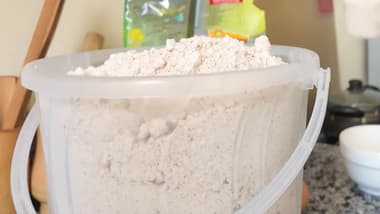
Uji power, compared to eating its ingredients individually, is also relatively expensive, especially if you're buying ready-made flour, which can go for around 500sh per kilo.
Who Is Uji Power Actually For?
If you are someone who is always on the go and can't be bothered to sit down with a plate of boiled nduma and cassava, uji power makes sense. It's convenient, relatively quick to prepare if you have the flour ready, and has a decent nutritional profile per cup.
The melamine calabash bowl has become the signature vessel for uji power across Kenyan restaurants and street vendors. (Photo: Fit Savanna)
It also works well for people who genuinely struggle to eat enough - those who need calorie-dense meals without having to cook multiple things. Think growing kids, people recovering from illness, or anyone who needs energy fast without overthinking it.
But if you are actively tracking your macros, trying to lose weight, or are simply budget-conscious, the individual ingredients will serve you better every time.
Uji power is not a superfood. It's not a cheat code for health, and, quite frankly, it won't undo a bad diet.
But it's not a scam either. Whether that's worth it depends entirely on your goals and your budget.
If I'm being honest, though, it won't satisfy your craving for wimbi-based uji - that's the GOAT.
Edited and proofread by Grace Njoroge, Copy Editor, Fit Savanna.
The information provided in this article is for informational purposes only and does not constitute medical or nutritional advice. If you have an underlying health condition or are considering significant changes to your diet, please consult a qualified healthcare professional before doing so.

Join the conversation!
Share your thoughts on “Uji Power Is Just Expensive Purée - Not Actually Uji” below.