A strange trend has been spreading quietly but rapidly across Kenyan Facebook groups. It promises healing from almost every illness, from gallstones to cancer, diabetes, hypertension, infertility and chronic pain.
The method of healing is a mixture of tobacco snuff (mbaki), comfrey leaves, and mbarīki (castor) oil patches. There is also a cocktail of various deworming medicines.
I became aware of this movement after I saw a friend patching herself all over with some kind of concoction and, in less than a week, taking a 14-day deworming medicine unprescribed by a doctor.
Her confidence in the protocol was unshakeable; she'd found it in a Facebook group where thousands of Kenyans were sharing similar testimonies. That's when I decided to investigate.
The idea behind such trends is often understandable. To many struggling with pain, expensive hospitals, or fear of surgery, these inexpensive solutions often feel comforting. But behind this comfort is something extremely dangerous.
These are real people, with real suffering, looking for help, and they are being led away from treatment that could save their lives.
What the Groups Teach
(Facebook groups promoting these protocols are public (as of 18th November 2025), with posts visible to anyone online. Identifying information has been redacted to protect privacy.)
Some of the groups popularising these trends have over 30,000 followers on Facebook.
They teach that mbaki detoxifies the body, comfrey leaves cure cancer, mbarīki oil draws disease out through the skin, and nicotine patches placed on the place of ailment can treat everything from diarrhoea to high blood pressure.
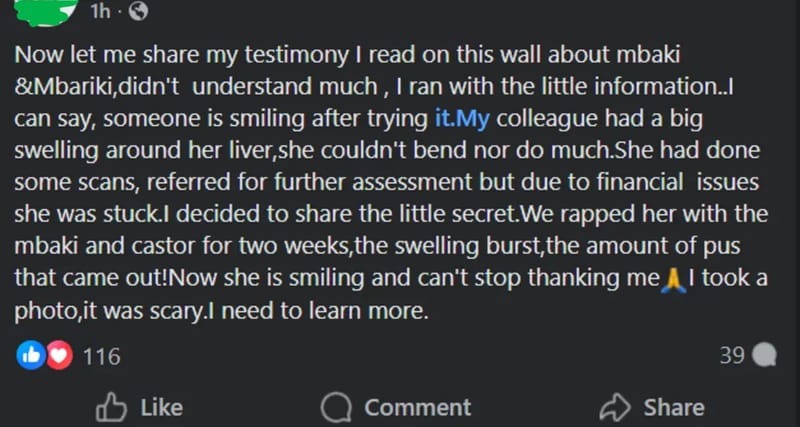
You also find members encouraging others to distrust hospitals and to rely instead on their "ancestral wisdom," supported by Bible verses and claims that modern science has been hiding cures.
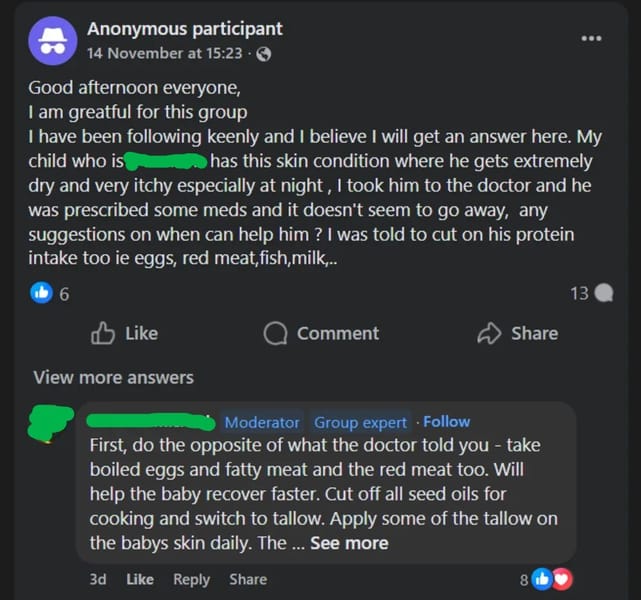
"First, do the opposite of what the doctor told you"
Group expert and moderator, Mbaki & Mbarīki Movement
Whilst the pharma industry is not entirely blameless, these alternative approaches are significantly more dangerous, especially since most Kenyans barely know how to properly conduct research on such topics.
Comfrey (pictured below) contains pyrrolizidine alkaloids that damage the liver and have been banned or restricted in many countries, including the US, UK, and EU, for internal use. Even prolonged skin use is considered unsafe.
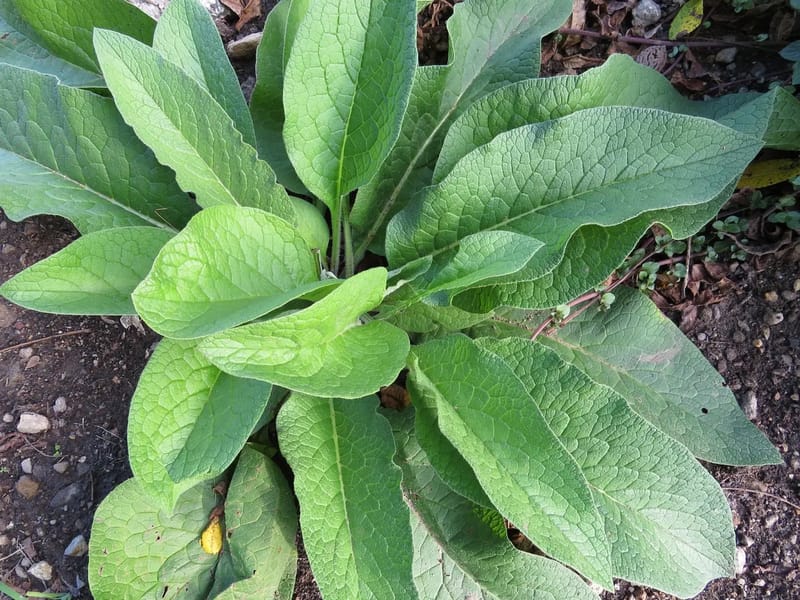
The idea that comfrey protects from cancer is not only untrue but completely false. In fact, the pyrrolizidine alkaloids in comfrey have been linked to liver cancer in animal studies, making it a potential carcinogen rather than a cancer cure. These toxic compounds are found in many herbal supplements and pose serious risks when consumed internally or applied to the skin over extended periods.
The Deworming Protocol
The movement, whilst designed to promote naturally produced medicine, does not shy away from recommending extremely dangerous doses of mainstream medicine for some conditions.
In proper medical practice, deworming medications like albendazole are prescribed for specific parasitic infections after diagnosis, usually as a single dose or short course. These groups, however, promote prolonged, unsupervised use as a cure-all.
The picture below is of the recommended 14-day deworming routine that is touted to help individuals address most conditions they are struggling with.
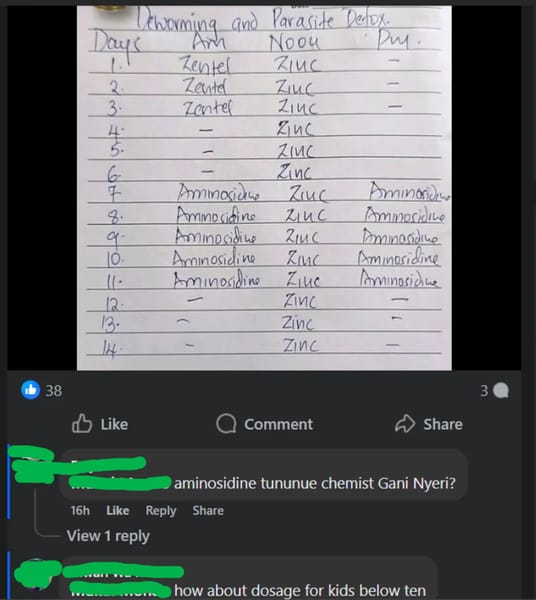
Zentel (albendazole), aminoside (an antibiotic), and zinc sulphate are safe only when used correctly and for the right conditions.
But as you can see from the picture above, these drugs are treated like universal cures and combined with tobacco patches, oils and liquid paraffin mixtures.
That combination is not traditional medicine; it is reckless self-medication. As you can see below, some members have even experienced severe complications after following recommendations.
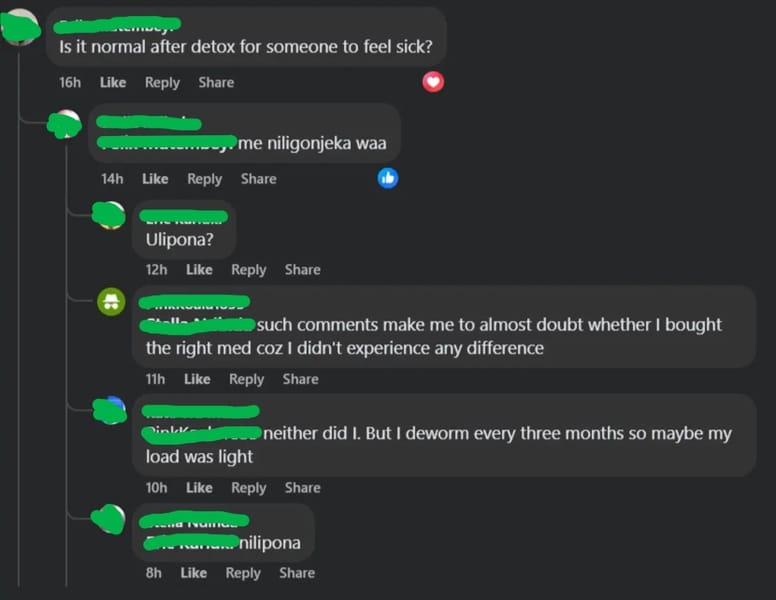
Real Medical Emergencies Being Ignored
What makes the movement especially worrying is how serious medical emergencies are being treated. Gallstones, for instance, can cause life-threatening complications requiring urgent surgery.
However, as you can see in the screenshot below, someone suffering painful gallstones is told to use tobacco patches instead of seeking medical care.
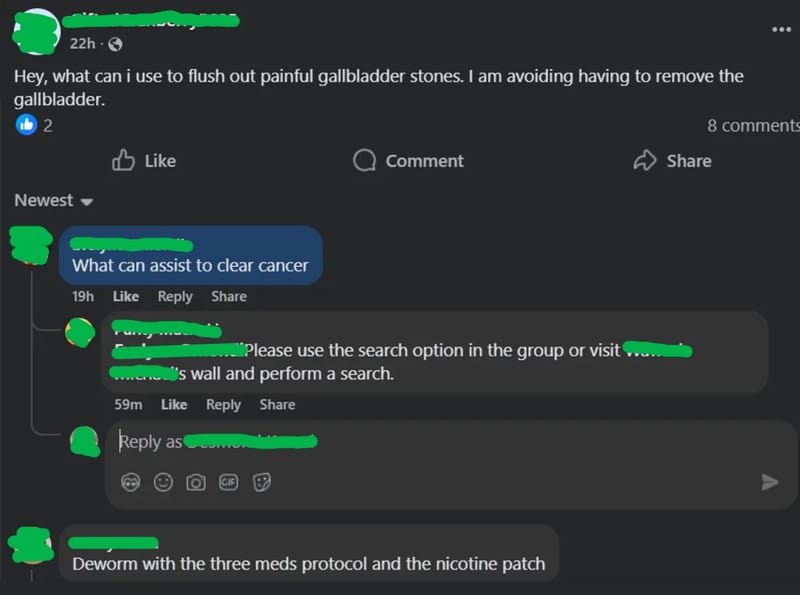
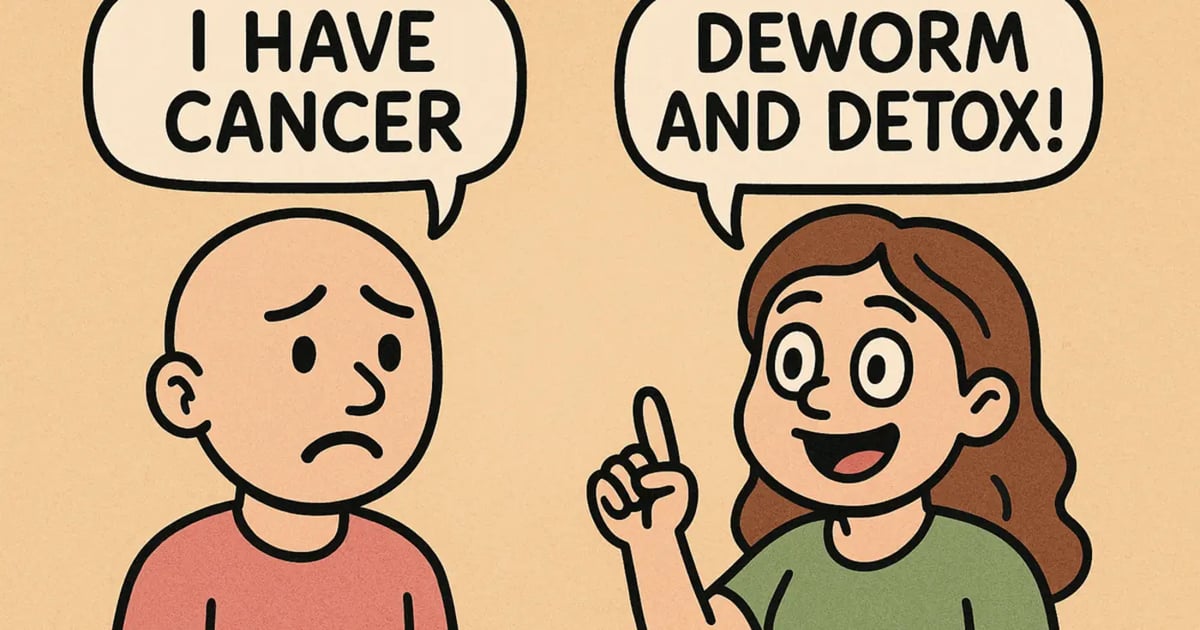
A cancer patient is advised to "deworm with the three-medicine protocol."
The main issue is selection bias: people who happen to resolve their symptoms with herbal medicines or detox routines are more likely to speak up, creating a misleading impression of effectiveness.
Kenya needs better access to healthcare, more trustworthy medical communication and more respect for traditional knowledge. But we also need honesty. Not everything shared in the name of "ancestral wisdom" is safe.
Why Kenyans Turn to These Dangerous Remedies
People fall for this movement because it offers something powerful: hope, community, simple answers, and the illusion of control.
It feels familiar and spiritual. It taps into frustration with our healthcare system. And it speaks confidently, using medical-sounding language about pathways, detox and hidden cures.
But confidence does not make something true, and cultural vocabulary does not make a treatment safe.
When people replace proper care with mbaki patches and random pharmaceutical regimens, the cost is often their health; and sometimes their life.
On one hand, I understand why such groups exist. Kenya's healthcare system is far from perfect. Most people can only afford the public hospitals. Private options are usually expensive and come with overpriced treatments and drugs.
But not every herbal remedy is harmless. And not every person quoting a Bible verse or wearing a white coat online is telling the truth.
Talking to Loved Ones About These Risks
If someone you care about is involved in these groups, speak gently.
Some scholars have shown that shame pushes people deeper into misinformation, a phenomenon called the backfire effect.
Conversations pull them out. Encourage real diagnosis, safer herbal use, and a balanced understanding of both culture and science.
When a movement claims that tobacco heals, comfrey cures cancer, and dewormers fix every disease, it is no longer about tradition or ancestral wisdom—it is about exploitation of desperate people. And Kenyans deserve better than that.
If you or someone you know is struggling with health issues and cannot afford private care, the least you can do is direct them to a public hospital. It might not be the fastest route to treatment, but it's far more likely to help than relying on mbaki and mbarīki patches.
Edited and proofread by Grace Njoroge, Copy Editor, Fit Savanna.
Medical Disclaimer: The information provided in this article is for informational purposes only. It does not constitute medical advice, diagnosis, or treatment. Always seek the advice of your physician or other qualified health provider regarding any questions about a medical condition.