Retatrutide in Kenya: 62% of Gym-Goers Have Never Heard of the Hyped Weight-Loss Drug
We surveyed 113 Kenyan gym-goers to find out how much they actually know about retatrutide, Ozempic, and other weight-loss drugs, and whether the online hype matches what's happening on the gym floor.
Earlier this year, we wrote an article on retatrutide, BPC-157, and TB-500, and why using these peptides disqualifies you from sanctioned athletic competitions.
At the time, we assumed most Kenyans were familiar with these drugs, specifically retatrutide, thanks mostly to the hype we saw across social media.
As we dug deeper, we started to question whether the apparent buzz was genuinely widespread or merely a product of algorithm-driven social media feeds. To find out, we conducted our own investigation.
The Survey
We designed a 13-question survey and promoted it through Meta ads, social media posts, and word of mouth in several gyms.
The purpose was to assess how much ordinary gym-goers know about incretin receptor agonist weight-loss drugs, including Ozempic, Mounjaro, Wegovy, and retatrutide. We also asked participants how they felt about the growing use of these medications.
According to Meta Ad Centre, our survey campaign reached more than 8,000 users across Meta’s platforms.
The survey was promoted via Meta ads across Instagram, Facebook, and Messenger, reaching 8,016 accounts over three days. (Image: Fit Savanna / Meta Ad Centre)
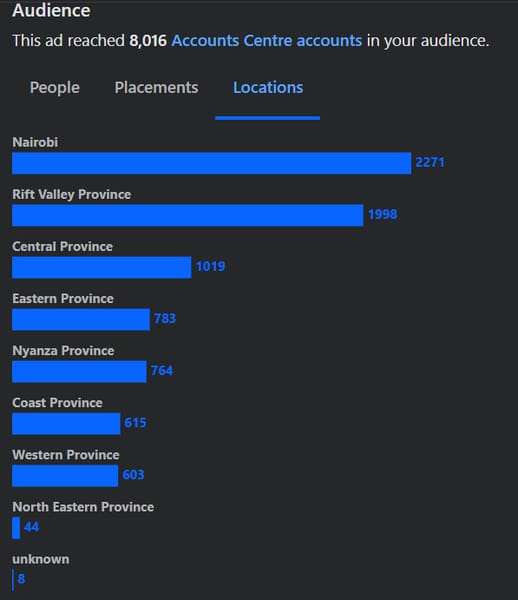
Nairobi recorded the highest number of ad views (2,271), followed by the Rift Valley, Central, Eastern, and Nyanza regions. As shown below, Meta’s advertising dashboard still groups locations using the former provincial classifications rather than Kenya’s current county system.
While the ad reached users in every province, completed responses skewed towards a handful of major cities. (Image: Fit Savanna / Meta Ad Centre)
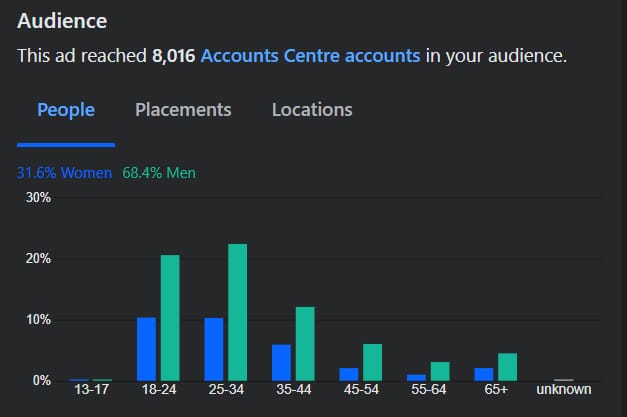
In terms of gender, 68% of ad views came from men, compared with 31% from women. However, the actual survey completions were much more balanced, with respondents splitting roughly 60% men to 40% women. This suggests that women who saw the ad were more likely to complete the survey than men.
The ad's audience skewed male and under 35, though completed survey responses landed closer to an even split. (Image: Fit Savanna / Meta Ad Centre)
It is important to note that this was an informal survey rather than a formal randomised research study. Since Meta’s algorithm determined who was most likely to see the ads, the responses may not represent the wider Kenyan gym-going population.
Even with those limitations, the findings were surprising and, in several cases, quite different from what we had expected. In total, we received 113 survey responses.
Everyone Knows Ozempic. Retatrutide, Not So Much.
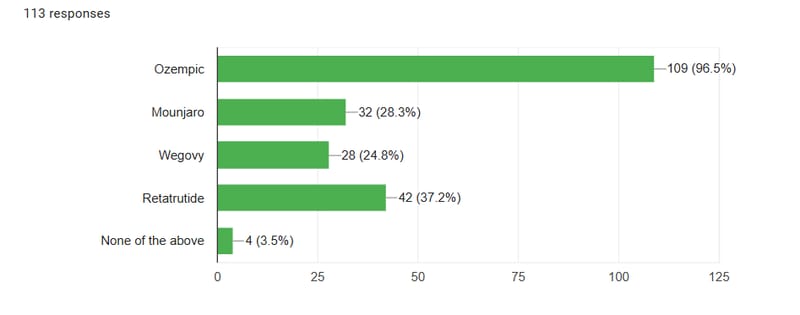
When asked which weight-loss medications they were familiar with, respondents put Ozempic at the top by a landslide (96.5%). Surprisingly, retatrutide came a distant second to Ozempic at 37.2%, ahead of Mounjaro (28.3%) and Wegovy (24.8%).
Ozempic dominates name recognition among the gym-goers we surveyed, while retatrutide, despite the online buzz, trails far behind. (Image: Fit Savanna)
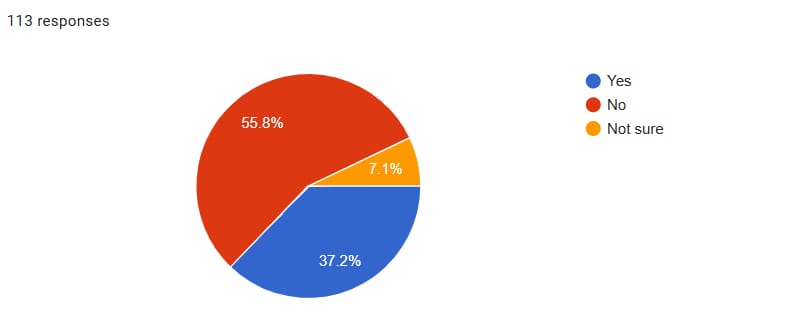
To confirm this finding, we asked a more direct question: "Before today, had you heard of retatrutide?" A majority of respondents (55.8%) said no, while a further 7.1% were unsure. Only 37.2% answered yes.
Asked directly, more than half of respondents said they'd never heard of retatrutide before taking the survey. (Image: Fit Savanna)
This was contrary to what we had assumed about retatrutide, especially given the massive online hype over the past year framing it as a far more effective option, even though it's still in clinical trials and unapproved for commercial use.
Eli Lilly has confirmed that it plans to submit a Biologics License Application to the FDA for retatrutide in the first quarter of 2027, with a typical review period of 10 to 12 months, putting realistic approval closer to late 2027 or 2028.
In fact, according to a recent CBS investigation in the US, the lack of approval hasn't stopped some doctors from prescribing it anyway, with everyday consumers increasingly turning to grey or black market sources for shots.
While distributing the survey through word of mouth, we also spoke with several individuals who anonymously shared how much they had paid for retatrutide locally. One source in Nairobi paid KES 18,000 for a 15 mg vial, purchased from a private seller rather than a licensed pharmacy. We verified this through an M-Pesa payment confirmation, the seller's price list, and the physical vial itself, and the figure was broadly consistent with the grey-market listings we encountered for the same dosage across Kenya.
Essentially, the weight-loss drug generating the most excitement in online fitness circles is, to most Kenyan gym-goers, still largely unknown, even as a smaller number are already sourcing it on the grey market.
Would Gym-Goers Actually Use It?
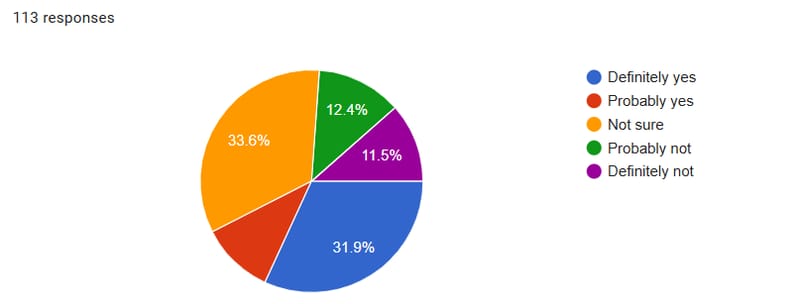
Awareness is one thing; willingness to use the drug is another. We therefore asked respondents whether they would take retatrutide if it were prescribed by a doctor.
Only 23% said they would not take it.
Willingness to use retatrutide under medical supervision. Most respondents leaned towards yes or uncertain rather than firmly opposed. (Image: Fit Savanna)
As shown in the chart above, about 32% said they would definitely take a prescribed injection, while an additional 10.6% said they would probably take it.
Surprisingly, nearly 60% either hesitated or leaned against taking it, including 33.6% who were outright unsure. That hesitation was unexpected, given that the question assumed the drug had already been prescribed by a doctor.
However, when we reviewed the written responses, the uncertainty became easier to understand. Many respondents associated these medications with ideas such as being “unnatural,” “shortcuts,” or encouraging laziness and a lack of discipline.
“No one should consider weight-loss medications. The only shortcut is proper diet and working out.”
Respondent
“They are shortcuts for people who are lazy and don’t have the discipline and focus to keep fit and eat healthy.”
Respondent
At the same time, several respondents argued that the drugs should not be dismissed outright. Some felt that social media discussions often portray them more negatively than they deserve.
“If doctors think they are okay, let people use them.”
Respondent
“They are very effective. I tried losing weight for the last five years, but it was only after I started using peptides that I began seeing serious results.”
Respondent
In other words, the responses suggest that many Kenyan gym-goers are not necessarily rejecting the science itself. Rather, they appear to be cautious about how these drugs are used and what they represent within fitness culture.
Not Anti-Drug, Just Anti-Shortcut
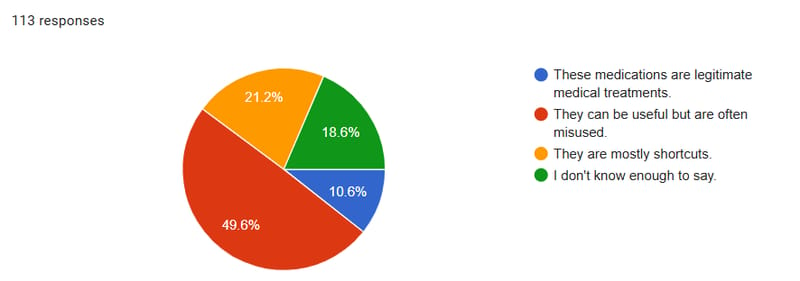
We also asked respondents to choose the statement that best reflected their view of these medications. The four options ranged from “legitimate medical treatment” to “mostly shortcuts.”
49.6% selected “They can be useful but are often misused.” Only 10.6% described the drugs as legitimate medical treatments outright, while 21.2% viewed them as mostly shortcuts. A further 18.6% said they didn’t know enough to form an opinion.
About half of respondents landed on the same middle-ground view: these drugs can be useful, but are often misused. (Image: Fit Savanna)
That middle-ground response, chosen by half of all respondents, closely matched the themes that emerged from the open-ended answers. Very few people were completely for or against these drugs. Most appeared to fall somewhere in between.
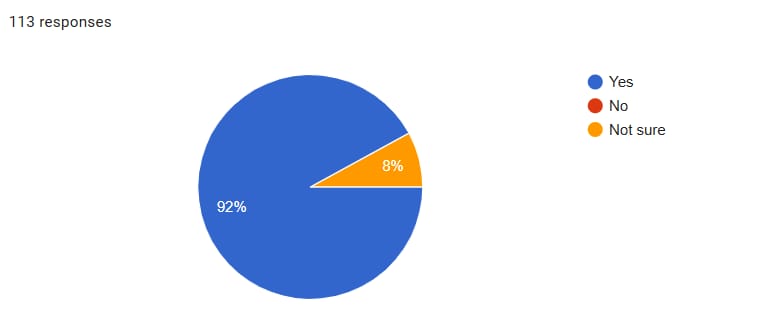
Regardless of their opinion on the drugs themselves, most respondents believed that healthy eating and regular exercise remain essential even when someone is using weight-loss medication. Only 8% were unsure.
Whatever they think of the drugs themselves, respondents overwhelmingly agreed diet and exercise still matter. (Image: Fit Savanna)
In other words, whatever gym-goers think about retatrutide, they do not appear to see it as a replacement for the fundamentals of health and fitness.
So, What Does This Actually Mean?
Retatrutide may be one of the most talked-about weight-loss compounds in Kenyan online fitness circles right now. However, being talked about is not the same as being widely understood.
This survey was not a formal scientific study, and its findings should be interpreted with that limitation in mind. Even so, the responses suggest that many people in Kenya’s fitness community are aware that weight-loss drugs can carry risks when used irresponsibly.
Similar to several respondents, our own takeaway is that the medications themselves are not inherently “good” or “bad.” What matters most is how, why, and under what medical supervision they are used.
Clinical research has shown that drugs in this category can help some people lose weight by reducing appetite and affecting the hormonal signals involved in hunger and fullness. However, they are not without drawbacks. Without adequate nutrition and resistance training, weight loss can include loss of muscle mass, and maintaining muscle is an important part of long-term health.
For most people, especially those without obesity-related medical complications such as type 2 diabetes, the better first steps are still improving diet, increasing physical activity, and building sustainable habits. Those behaviours are generally far more likely to produce health benefits that can be maintained over the long term.
Reviewed and edited by Grace Mutua, Fit Savanna.
Medical Disclaimer:The information provided in this article is for informational purposes only. It does not constitute medical advice, diagnosis, or treatment. This survey reflects the opinions and self-reported experiences of respondents and should not be interpreted as clinical guidance. Always seek the advice of your physician or other qualified health provider regarding any questions about a medical condition or the use of weight-loss medications.





Join the conversation!
Share your thoughts on “Retatrutide in Kenya: 62% of Gym-Goers Have Never Heard of the Hyped Weight-Loss Drug” below.